Understanding Risks, Securing Supply Chains
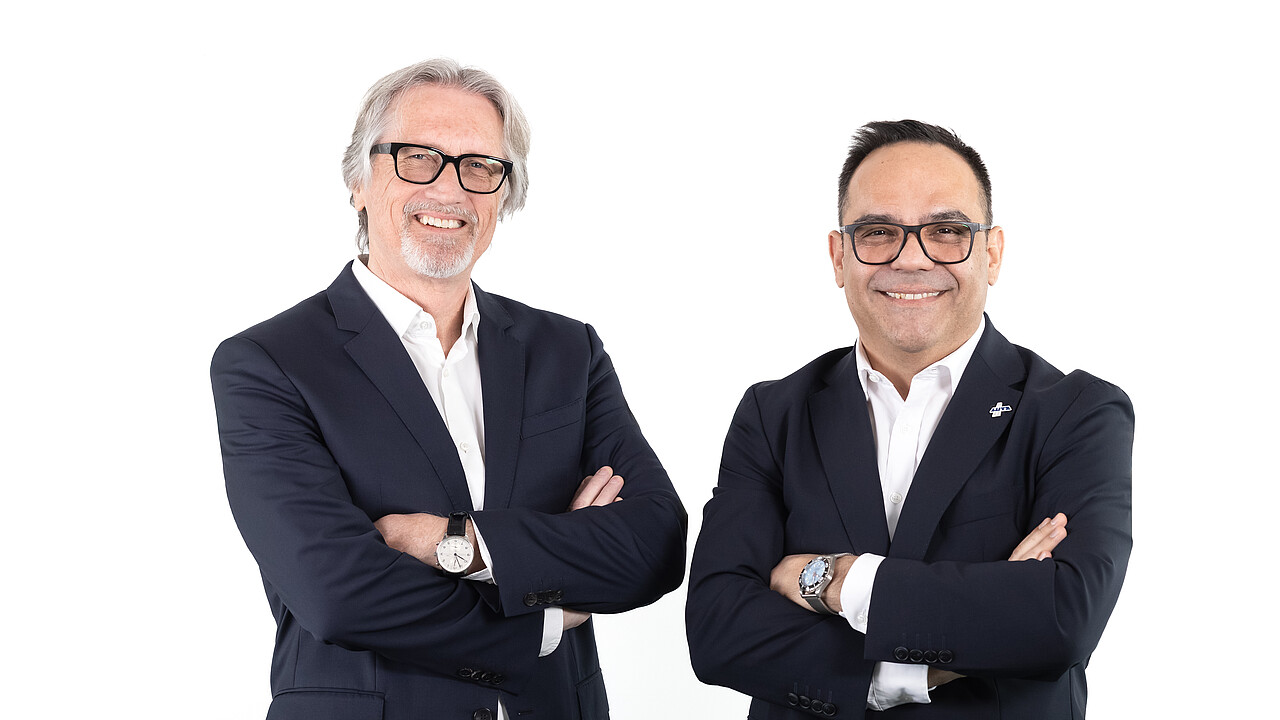
LUTZ Assekuranz has been providing insurance for international transport for more than 50 years and is regarded as one of the leading specialist brokers, particularly in Eastern Europe. In this interview, the two managing directors of LUTZ Assekuranz, Tamer Kiliç and Herbert Hasenhütl, discuss how they assess risks, address challenges, and why diversity is a key factor in their success.
What developments are currently of greatest concern to your customers?
Tamer Kiliç: The driver shortage is currently one of the biggest issues. Not just locally, but across Europe. Countries are actively recruiting drivers from abroad, which is sparking fierce competition. This has a direct impact on capacity and costs. At the same time, long payment terms are placing an enormous strain on the industry. Many freight forwarders have to pre-finance shipments. This massively increases financial pressure and forces companies to cut costs wherever possible—including on insurance coverage. And this is precisely where it’s important to explain where cutting costs makes sense and where it becomes dangerous.
Herbert Hasenhütl: Another factor that is often underestimated is changes in transport routes. Geopolitical tensions are forcing established routes to change. This not only extends transport times but also shifts the risk profile to regions that have previously received little attention. At the same time, regulatory requirements are becoming stricter. Many of our customers today must comply with documentation requirements that did not exist in this form just a few years ago.
– Herbert Hasenhütl, Managing Director LUTZ-AssekuranzToday, we are seeing a significant shift toward theft, embezzlement, and total loss of merchandise, as the value of goods—and thus their appeal to organized crime—continues to rise.
What risks are still frequently underestimated—and how are loss patterns evolving?
Herbert Hasenhütl: In the past, traditional accident damage was the dominant factor. Nowadays, vehicles are better equipped with safety features, making serious accidents less common. Today, we’re seeing a significant shift toward theft, embezzlement, and total loss of goods, as the value of goods—and thus their appeal to organized crime—continues to rise.
Tamer Kiliç: Cumulative losses are also often underestimated. If a ferry carrying 40 or 50 trucks from the same carrier sinks, the resulting damage runs into the millions. Many companies think in terms of individual claims, not cluster risks. Furthermore, cyber risks are still too often overlooked—yet digital attacks can paralyze entire supply chains. We try to convince our clients that technical prevention is just as important as physical security measures.
– Tamer Kiliç, Managing Director LUTZ-AssekuranzIf a customer discloses how they transport goods, which stopovers are planned, or what internal security processes are in place, we can provide appropriate security measures. Transparency—on both sides—is key here.
What are the biggest challenges in securing international supply chains?
Herbert Hasenhütl: The biggest challenge is and remains the diversity of legal jurisdictions. A shipment from Turkey to Germany, for example, crosses several countries with different liability regimes, security levels, and regulatory structures. This makes a standardized risk assessment practically impossible. It becomes particularly complex when new routes are taken and we have to assess risks for which there is little prior experience.
Tamer Kiliç: A decisive factor is the quality of information. We can only provide advice as well as we are informed about the processes. If a customer discloses how they transport goods, which stopovers are planned, or what internal security processes exist, we can provide appropriate protection. Transparency—on both sides—is the key here.
LUTZ has been particularly successful in Eastern Europe. What is the reason for this?
Tamer Kiliç: We’ve been active in these markets for decades and know virtually every key player. Our biggest USP, however, is that we communicate in the local language—not just in sales, but also when claims arise. This builds a different kind of trust. Furthermore, we don’t simply offer translated versions of our products. We develop policy language tailored to local laws, because many small and medium-sized business owners would not fully understand English-language contracts.
Herbert Hasenhütl: And we understand the cultures. Many of our employees come from Bulgaria, Poland, Turkey, or Romania. This is an invaluable advantage, because cultural nuances are often decisive in business.
What distinguishes these markets is their price sensitivity—a result of historical factors. For a long time, many Eastern European companies were accustomed to state-run insurers that offered limited coverage. Today, they receive significantly more comprehensive coverage, and we invest a great deal of time in explaining this added value.
What role does digitalization play in claims management?
Herbert Hasenhütl: Digital data helps us track claims with precision. Whether it’s GPS, log data, or tracking platforms—we now know quite precisely when and where an incident occurred. This makes it much easier to establish the facts and ensures faster claim settlements. In addition, we identify patterns based on data analysis. This allows us to work with customers to develop preventive measures before the next loss occurs.
How do you work with customers to find a balance between deductible and insurance coverage?
Tamer Kiliç: That depends heavily on the risk profile. Some companies want to bear as much of the cost themselves as possible to lower premiums. Others want maximum security. We analyze processes, routes, claims history, and the company’s financial resilience. A well-chosen deductible is often a sensible middle ground: it strengthens the company’s own risk awareness while reducing costs. But it must be manageable—both financially and organizationally.
What has changed the most in LUTZ’s 50-year history?
Herbert Hasenhütl: Aside from the changing nature of claims, the pace of everything has changed the most. In the past, claims were reported by mail—today, everything is digital. Complexity has also increased: more regulations, more stakeholders, more interfaces. But that’s a societal phenomenon, not just an industry-specific one.
Tamer Kiliç: And the economic conditions. Margins in logistics used to be very different. Today, many companies are operating near their limits. That makes our consulting all the more important. At the same time, regulatory requirements have multiplied—whether from the EU, national customs regulations, or international trade agreements.
What sets LUTZ apart from traditional industrial brokers?
Herbert Hasenhütl: We’ve been developing our own policy language for decades. That’s unusual, because brokers typically adopt the insurers’ terms and conditions. We, on the other hand, actively help shape them because we know what freight forwarders and carriers really need.
Tamer Kiliç: And we speak our clients’ language—both professionally and culturally. Many of our employees have worked in the freight forwarding industry themselves, some even as truck drivers. This understanding of the real world of transportation is a major advantage when it comes to practical solutions. We also specialize in small and medium-sized enterprises (SMEs), although we also have clients with more than 1,000 vehicles.
How does the collaboration with SCHUNCK and the Ecclesia Group work?
Tamer Kiliç: LUTZ brings expertise in transportation and Eastern Europe to the table, while SCHUNCK and Ecclesia have strong operations in Germany and Spain, as well as their own specialized teams, such as those focused on rail or cyber. Customers benefit immediately from this expertise without having to search for multiple points of contact themselves.
Herbert Hasenhütl: For us, this collaboration means we have access to the resources of a large insurance group. This increases our market opportunities, especially with international clients. Conversely, SCHUNCK clients can leverage our language and cultural expertise when they operate in Eastern Europe or employ staff there.
How do LUTZ and SCHUNCK position themselves in the market—and how do they complement each other?
Herbert Hasenhütl: LUTZ focuses on carrier liability as well as small and medium-sized transport and logistics companies, particularly in Eastern and Southeastern Europe. SCHUNCK primarily serves larger logistics providers. This clear distinction creates synergies rather than overlaps.
Tamer Kiliç: In practice, this means: If we need additional expertise for a client—for example, in the areas of cyber, rail, or major international programs—we bring SCHUNCK or Ecclesia directly on board. Conversely, we support SCHUNCK whenever a German company has branches in Eastern Europe or is establishing new locations there.